Overcome Challenges Of Learning Arabic & Qur'an In Ramadan with Qortoba Institution
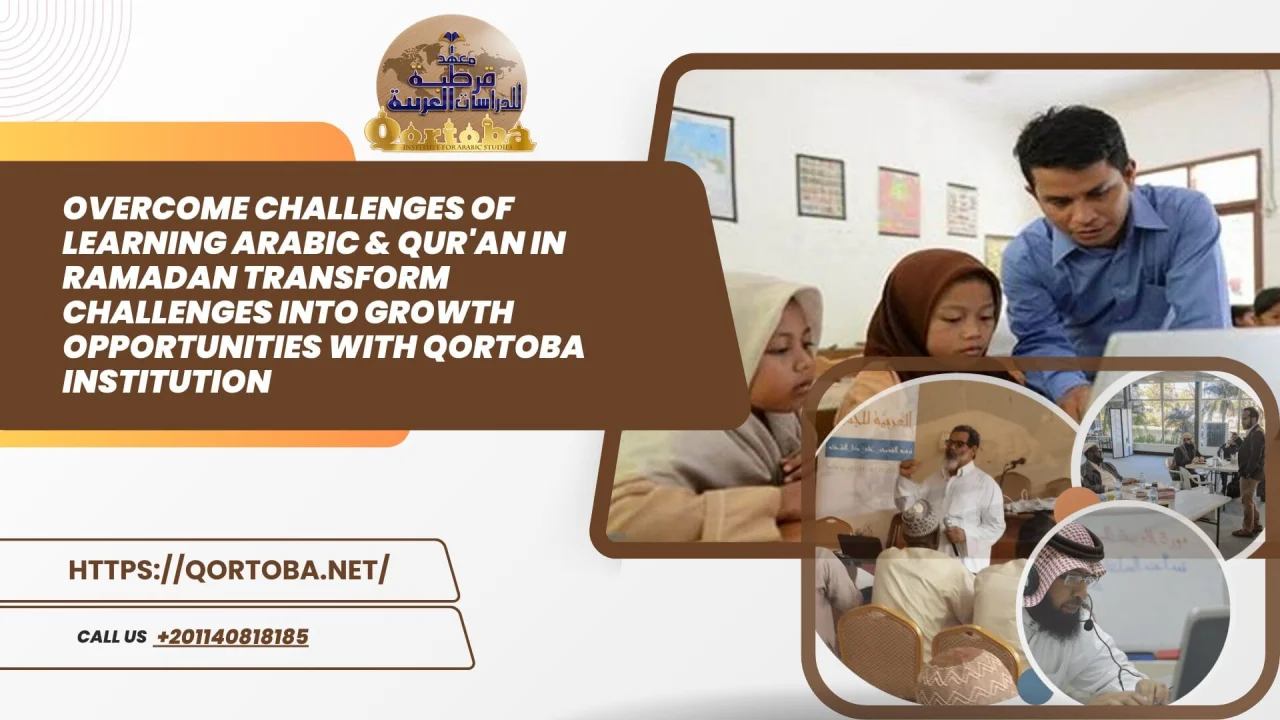
Overcome Challenges Of Learning Arabic & Qur'an In Ramadan Transform challenges into growth opportunities with Qortoba Institution
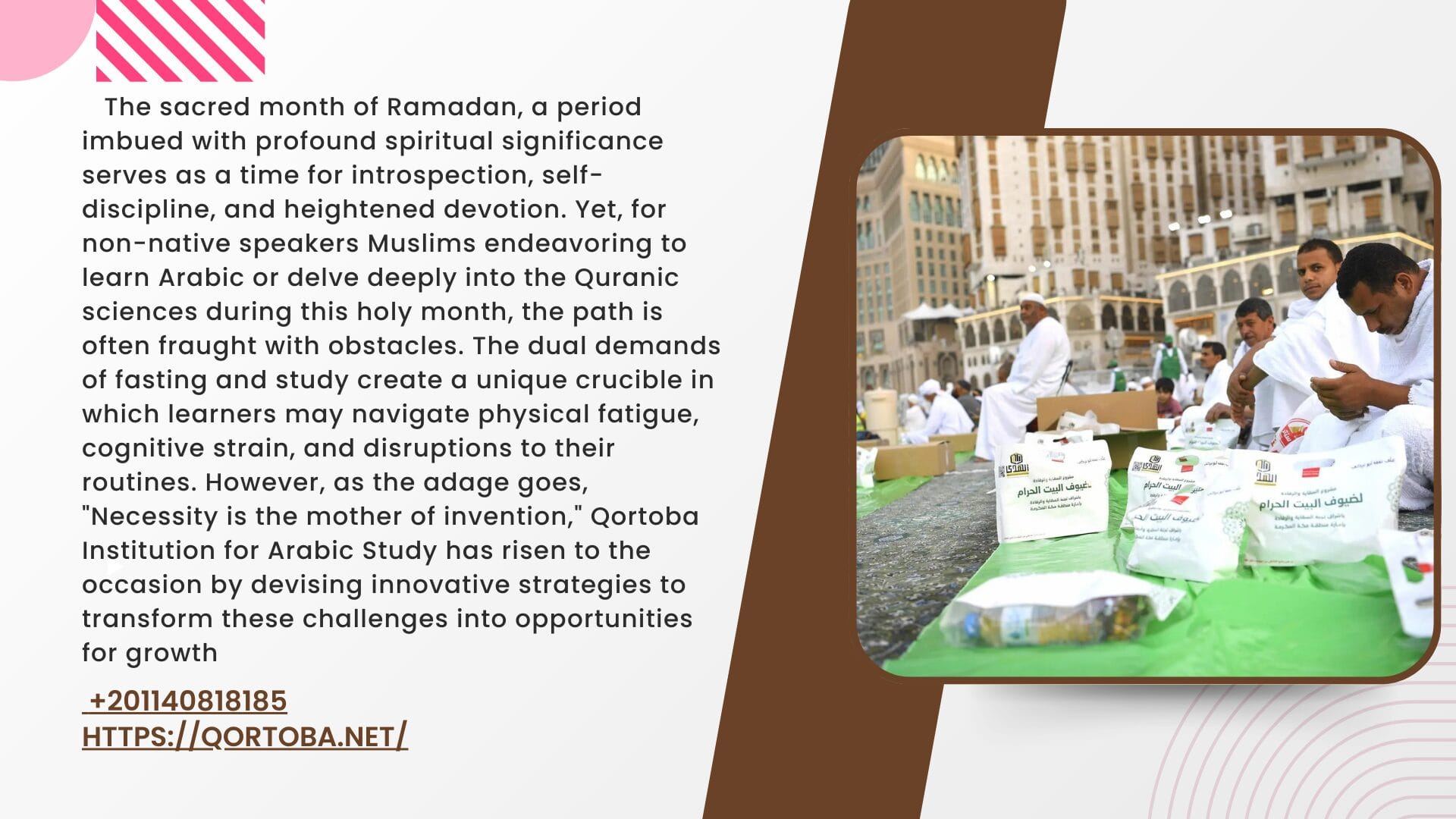
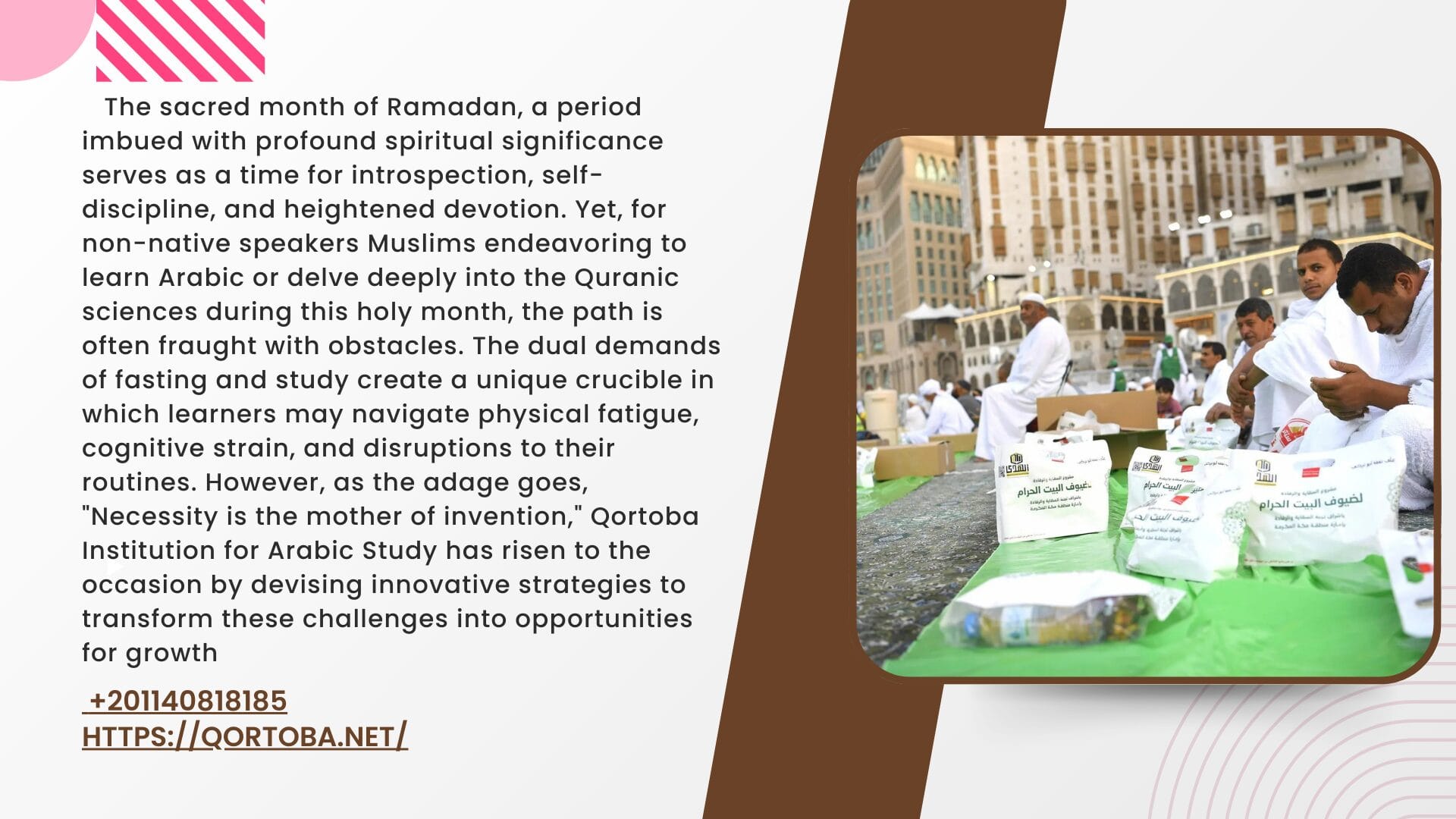
The sacred month of Ramadan, a period imbued with profound spiritual significance, serves as a time for introspection, self-discipline, and heightened devotion. Yet, for non-native speaker Muslims endeavoring to learn Arabic or delve deeply into the Quranic sciences during this holy month, the path is often fraught with obstacles. The dual demands of fasting and study create a unique crucible in which learners may navigate physical fatigue, cognitive strain, and disruptions to their routines. However, as the adage goes, "Necessity is the mother of invention," Qortoba Institution for Arabic Study has risen to the occasion by devising innovative strategies to transform these challenges into opportunities for growth.
The Challenges of Learning in Ramadan*
1- Cognitive Strain Amidst Physical Deprivation
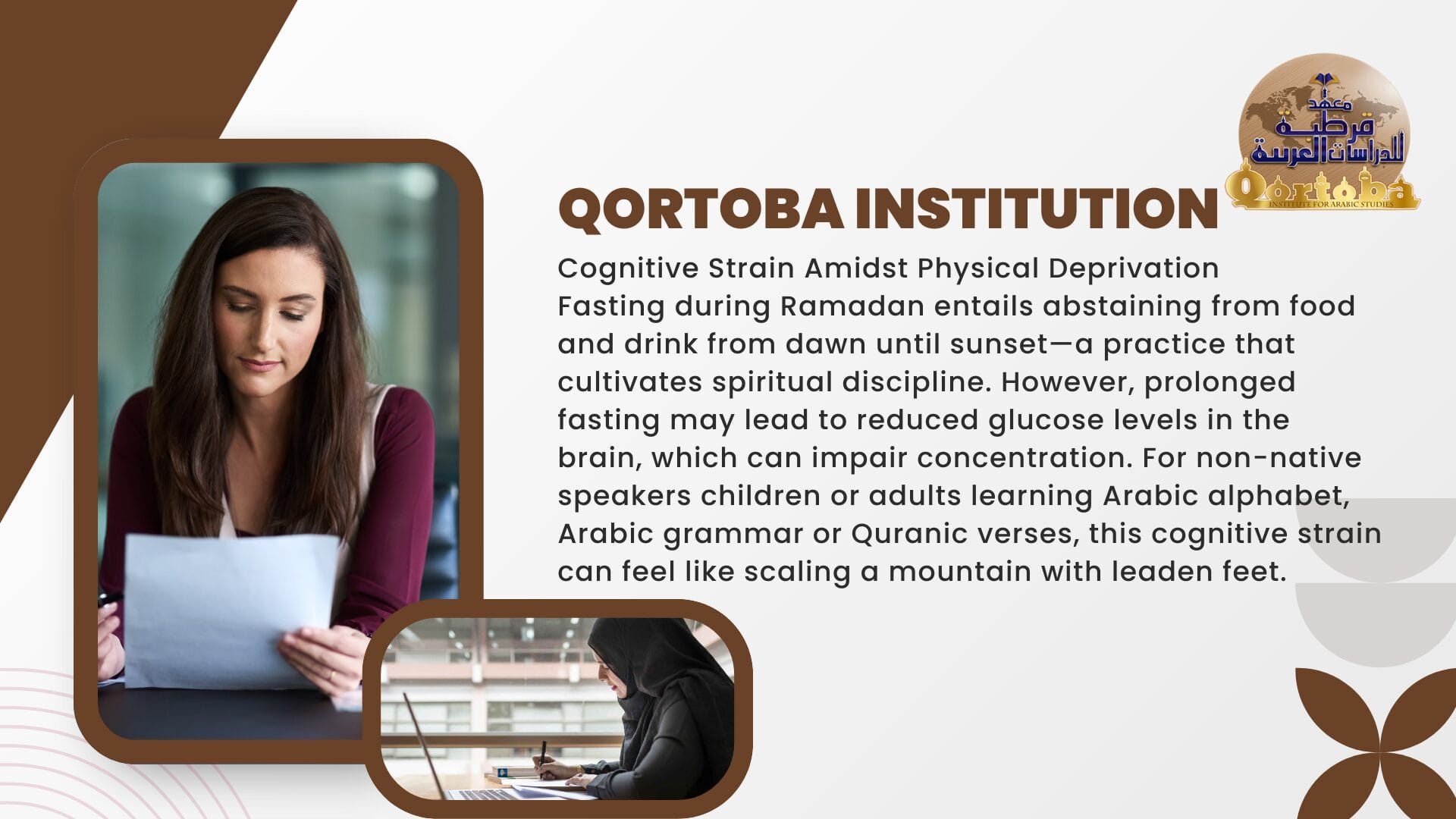
Fasting during Ramadan entails abstaining from food and drink from dawn until sunset—a practice that cultivates spiritual discipline. However, prolonged fasting may lead to reduced glucose levels in the brain, which can impair concentration. For non-native speaker children or adults learning the Arabic alphabet, Arabic grammar or Quranic verses, this cognitive strain can feel like scaling a mountain with leaden feet.
2- Disruption of Circadian Rhythms
Ramadan reorients the daily schedule around acts of worship such as Suhoor (the pre-dawn meal), Iftar (the breaking of the fast), and Taraweeh prayers (nightly congregational prayers). While spiritually enriching, these shifts may wreak havoc on one’s circadian rhythms, leaving scholars unable to maintain consistent study habits. Non-native speaker Muslim students in America, Britain & Canada —given young learners— may have difficulty balancing between spiritual obligations and academic pursuits.
3- Competing Demands on Time
Ramadan is not merely a solitary spiritual journey but also a time for communal gatherings and family bonds. The shared iftar meals and extended family interactions—though cherished—can encroach upon hours otherwise earmarked for focused study. Learners are thus caught between "a rock and a hard place," striving to honor both their social commitments and their educational goals.
Turning Trials into Triumphs: Qortoba’s Tailored Solutions
In light of the aforementioned challenges, Qortoba Institution has emerged as a beacon of hope for non-native speaker Muslim scholars seeking to harmonize their spiritual and academic aspirations during Ramadan. By adopting a learner-centric approach that integrates tradition with innovation, Qortoba Institution for learning Arabic & Qur'an equips non-native speaker Muslims in Britain, America & Canada with tools to surmount these hurdles.
1- Flexible Scheduling: Meeting Students Where They Are
Recognizing that energy levels ebb and flow throughout the day during Ramadan, Qortoba Institution offers adaptable timetables that align with students’ peak productivity periods. Classes for kids or adults can be scheduled post-Iftar, when physical nourishment restores mental clarity. Further, classes can be given before Suhoor for adults, when their minds are fresh and undistracted by daily obligations. This flexibility ensures that non-native speaker Muslim learners in Britain, America & Canada can "strike while the iron is hot," capitalizing on moments of heightened focus.
2- Leveraging Technology: A Classroom Without Borders
In an era where digital tools reign supreme, Qortoba Institution for learning Arabic & Qur'an harnesses the power of e-learning platforms to provide students with round-the-clock access to high-quality resources. Recorded lectures, interactive exercises, fun activities, educational games, puzzles and personalized feedback enable learners to revisit the material at their own pace—a lifeline for scholars whose schedules are in flux during Ramadan. This approach exemplifies the idiom "teaching a man to fish," equipping Non-native speakers and Muslim students with skills that endure beyond the confines of structured lessons.
3- Fostering a Sense of Community
As the saying goes, "a burden shared is a burden halved." Qortoba Institution for learning Arabic & Qur'an cultivates a sense of camaraderie among its students by organizing virtual study groups and discussion forums where learners can exchange insights, share motivational tips, and hold one another accountable. These communities serve as both a source of encouragement and a reminder that no one walks this path alone.
4- Contextualizing Learning: Bridging Language and Faith
Qortoba Institution’s curriculum seamlessly integrates linguistic instruction with Quranic studies, enabling students to see Arabic not merely as an academic subject but as a vessel for spiritual enrichment. For example, lessons may focus on unpacking the linguistic beauty of Quranic verses or exploring prophetic supplications (du’as) in their original form. By aligning language learning with acts of worship, Qortoba inspires students to view their studies as an extension of their devotion—a case of "killing two birds with one stone."
In summary, while learning Arabic or studying Quranic sciences during Ramadan, for non-native speaker Muslims in the West such as America, Britain & Canada may feel like navigating uncharted waters. Such an institution as Qortoba provides the compass needed to stay on course. Through flexible scheduling, technological innovation, community support systems, and spiritually resonant curricula, Qortoba empowers learners to turn adversity into opportunity. Indeed, as Ramadan teaches us that "with hardship comes ease", so too does it remind us that perseverance in pursuit of knowledge is itself an act of worship—one that reaps rewards both in this world and the Hereafter.
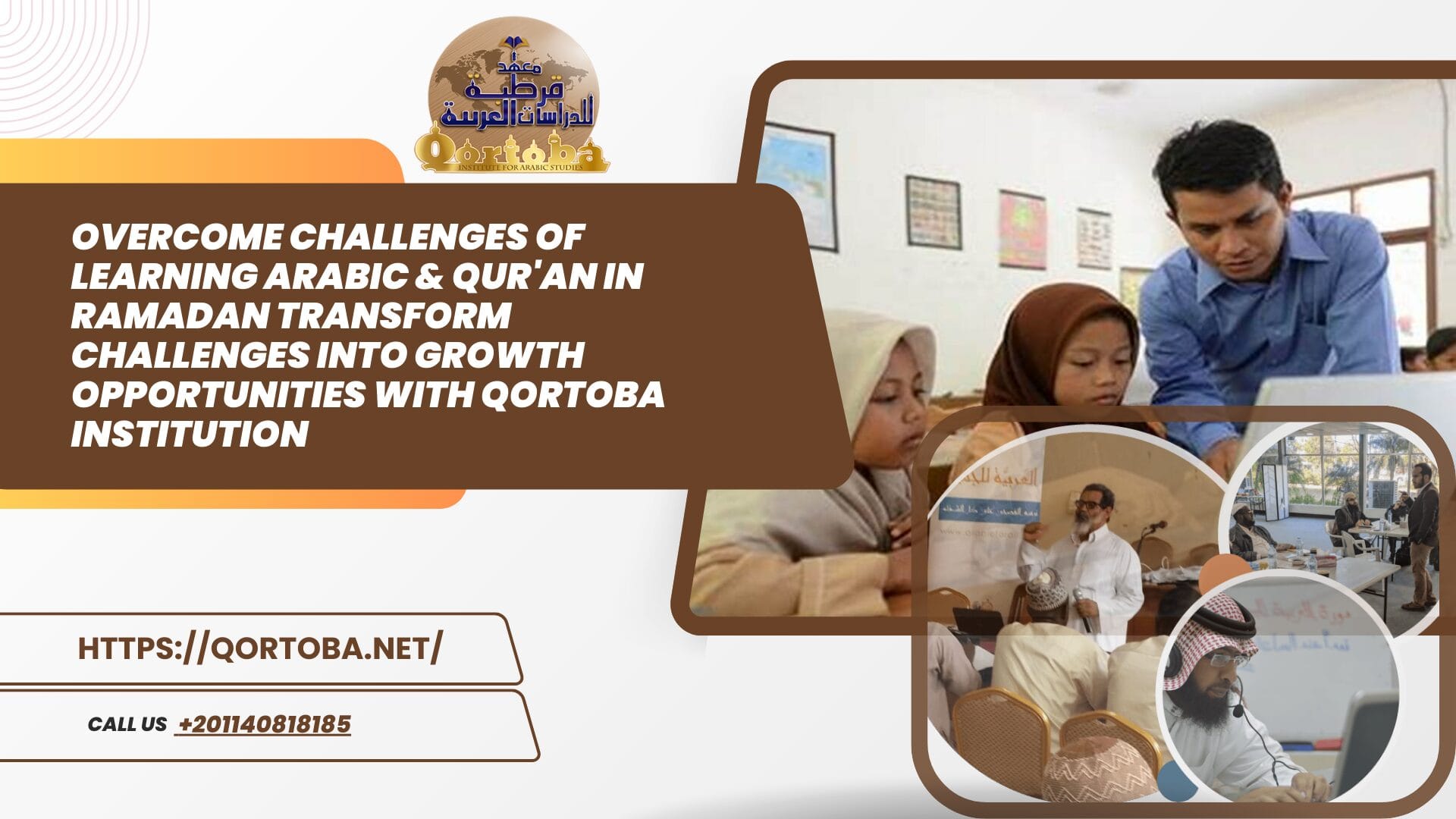
An Egyptian house of Arabic learning — teaching Arabic and the Qur'an to non-native speakers online, in Cairo and in Al-Madinah.