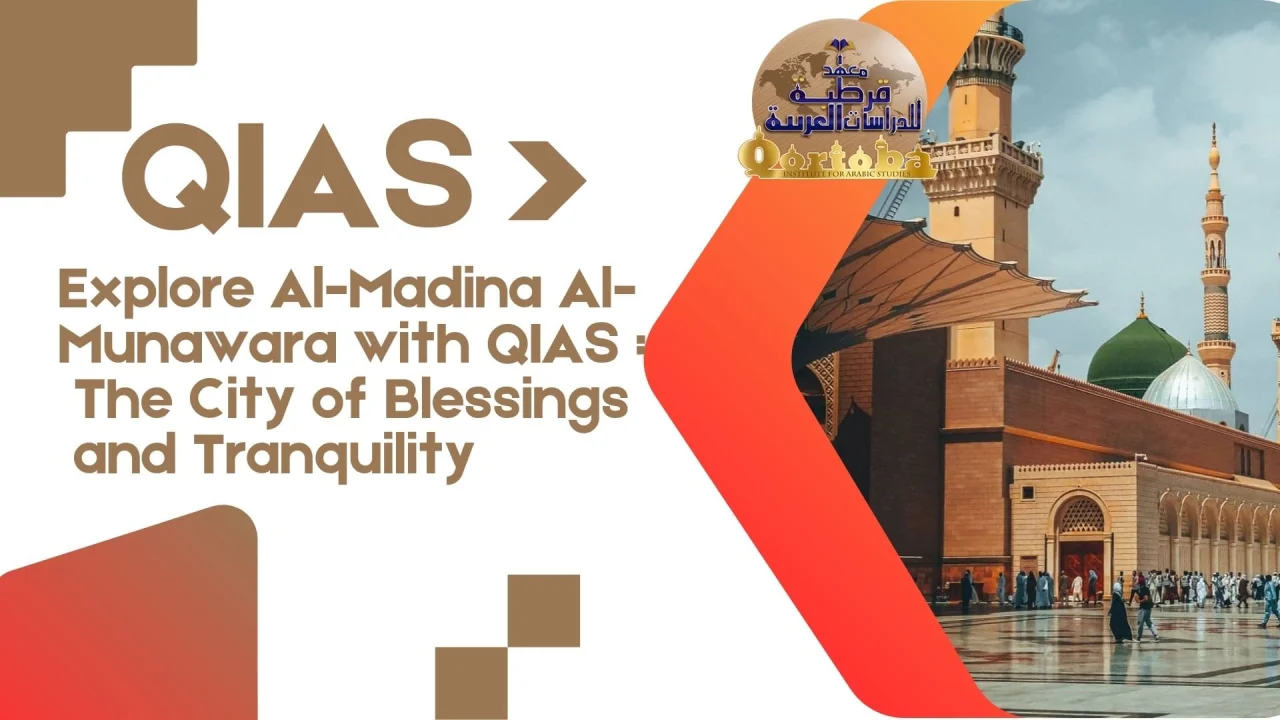
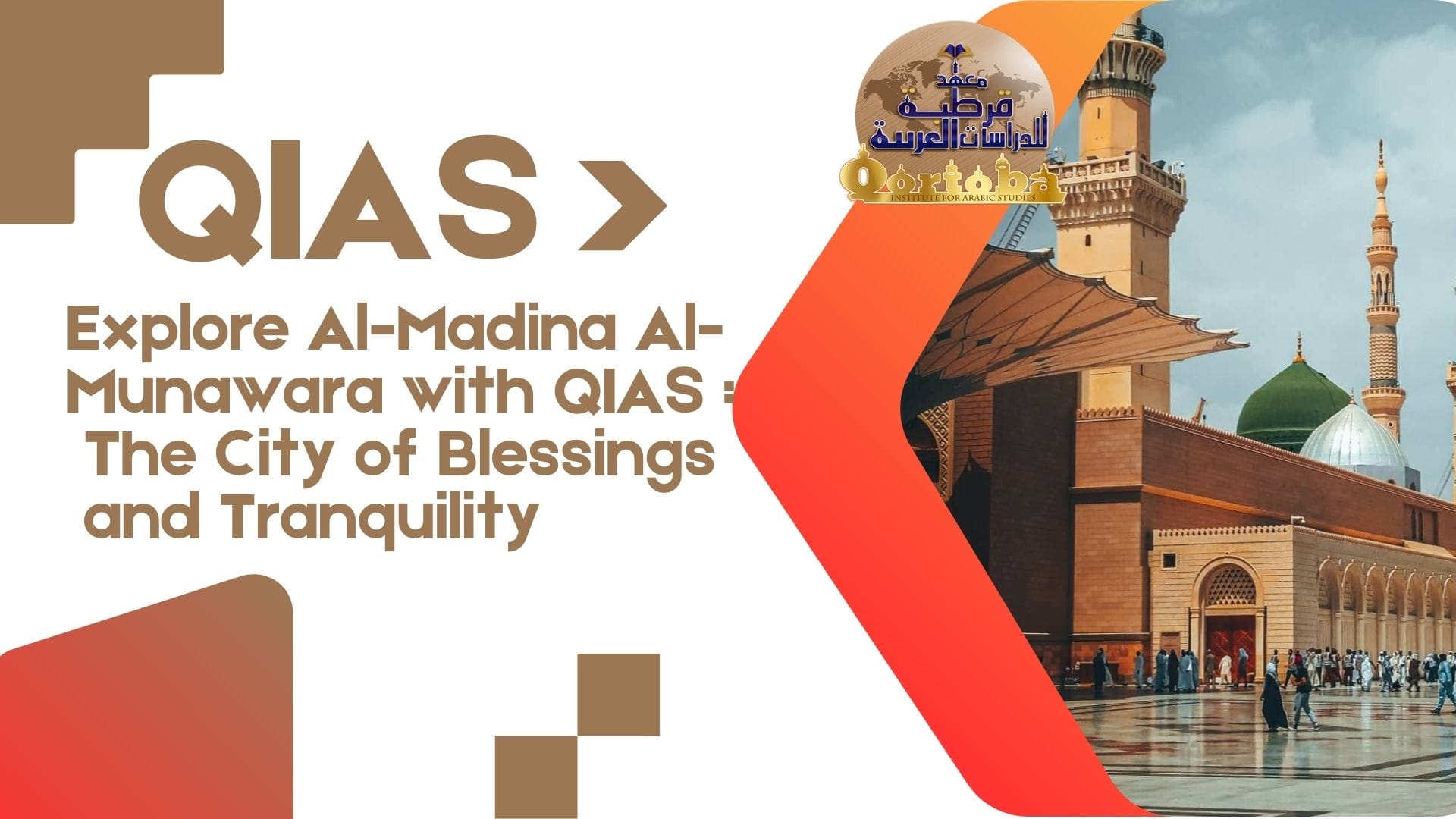
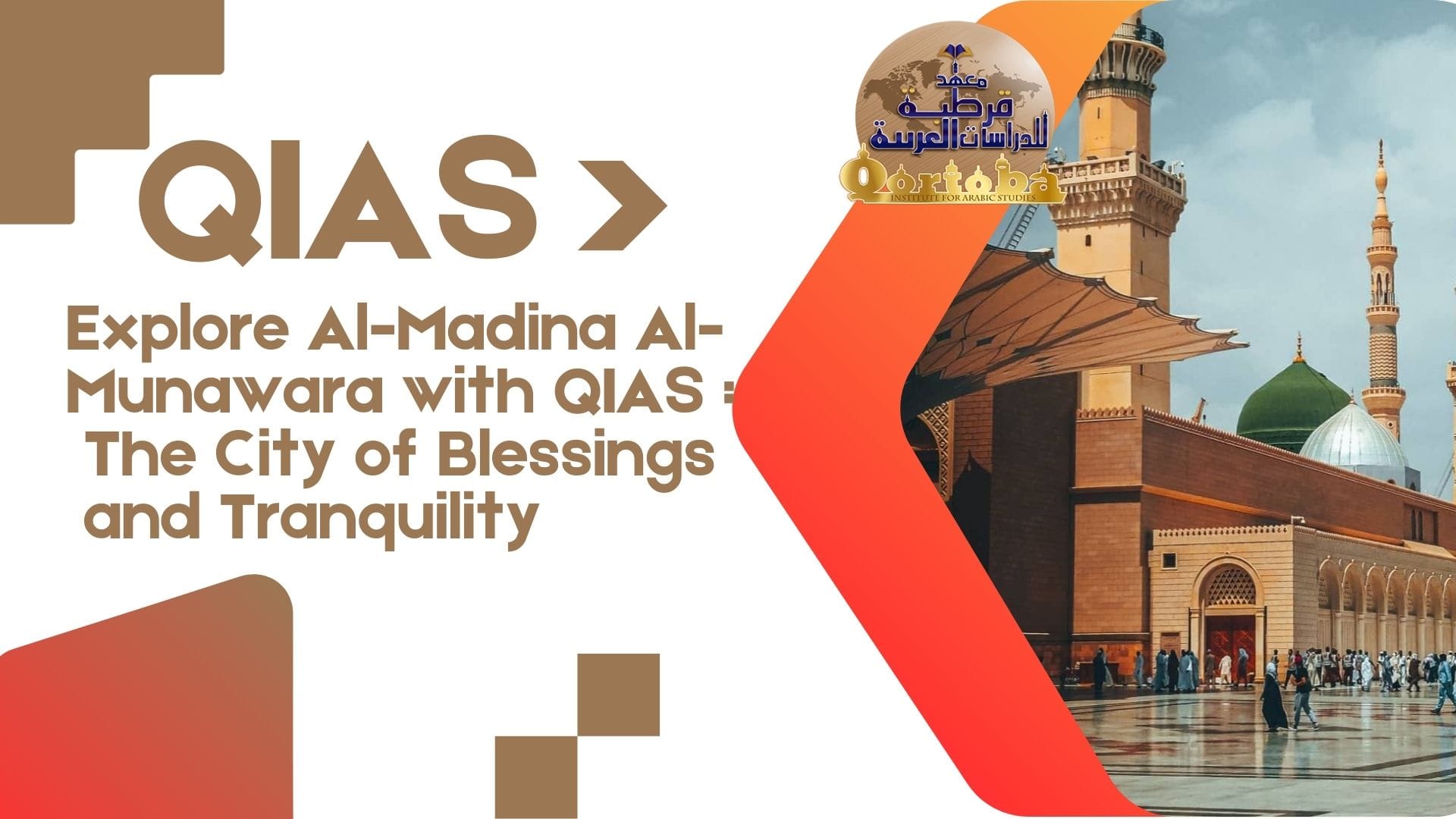
Explore Al-Madina Al-Munawara with QIAS: The City of Blessings and Tranquility
Al-Madina Al-Munawara, often referred to simply as Al-Madina, holds a revered place in the hearts of over 1.9 billion Muslims worldwide. Nestled in the heart of the Arabian Peninsula, this city stands as a sanctuary of spiritual enlightenment, historical significance, and unparalleled tranquility. As the second holiest site in Islam, preceded only by Makkah, Al-Madina represents a divine testament to the enduring legacy of the Prophet Muhammad (PBUH) and the profound spiritual and communal merits it offers to those who visit or dwell within its sanctified borders. QIAS (Qortoba Institution for Arabic Studies) plays a crucial role in bridging the gap for non-native Muslim speakers in Britain, America & Canada, enabling them to access and appreciate the divine blessings enshrined within this sacred city, elevating all who are privileged to enter its sanctified embrace.
- Historical and Religious Significance
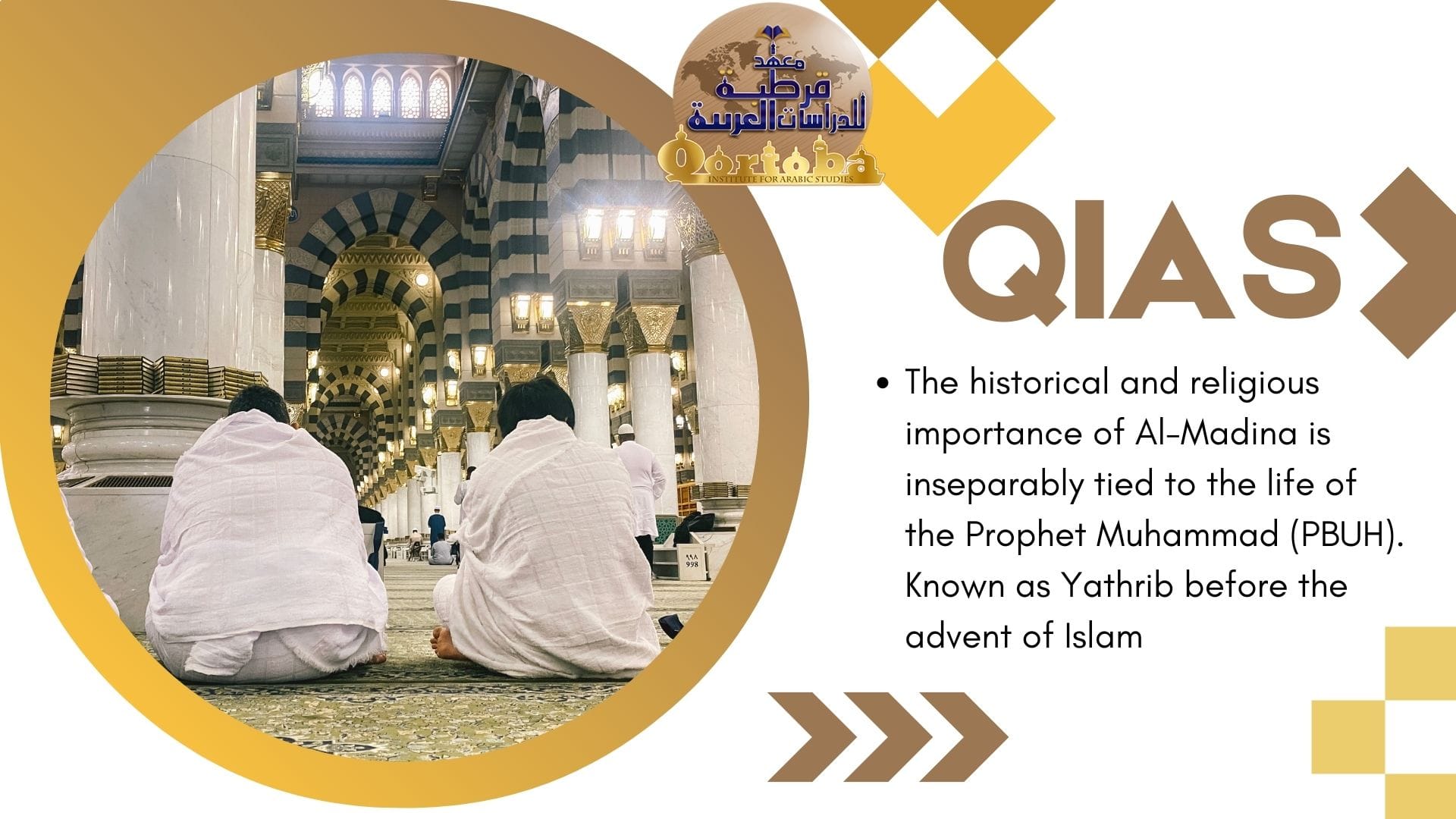
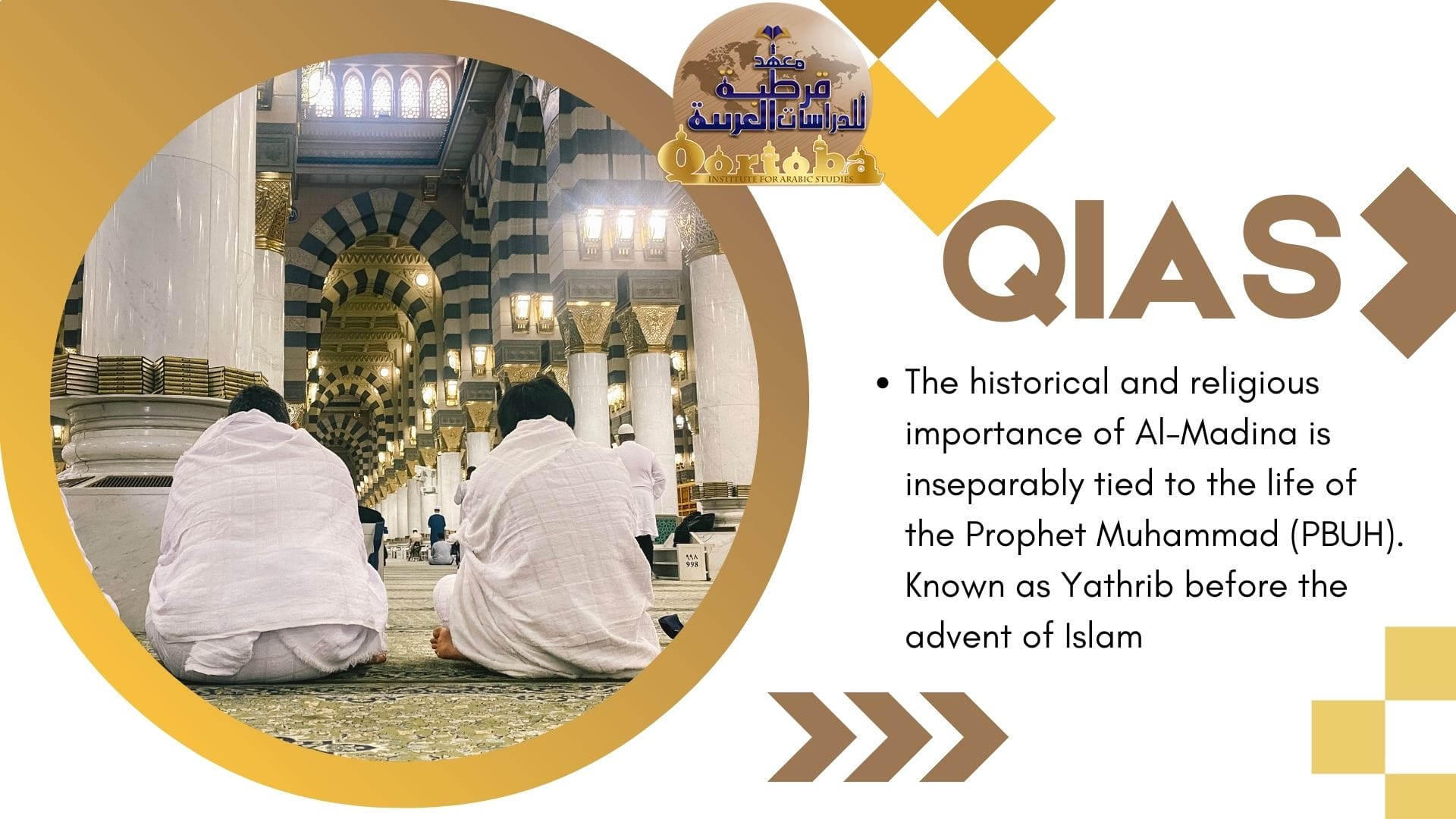
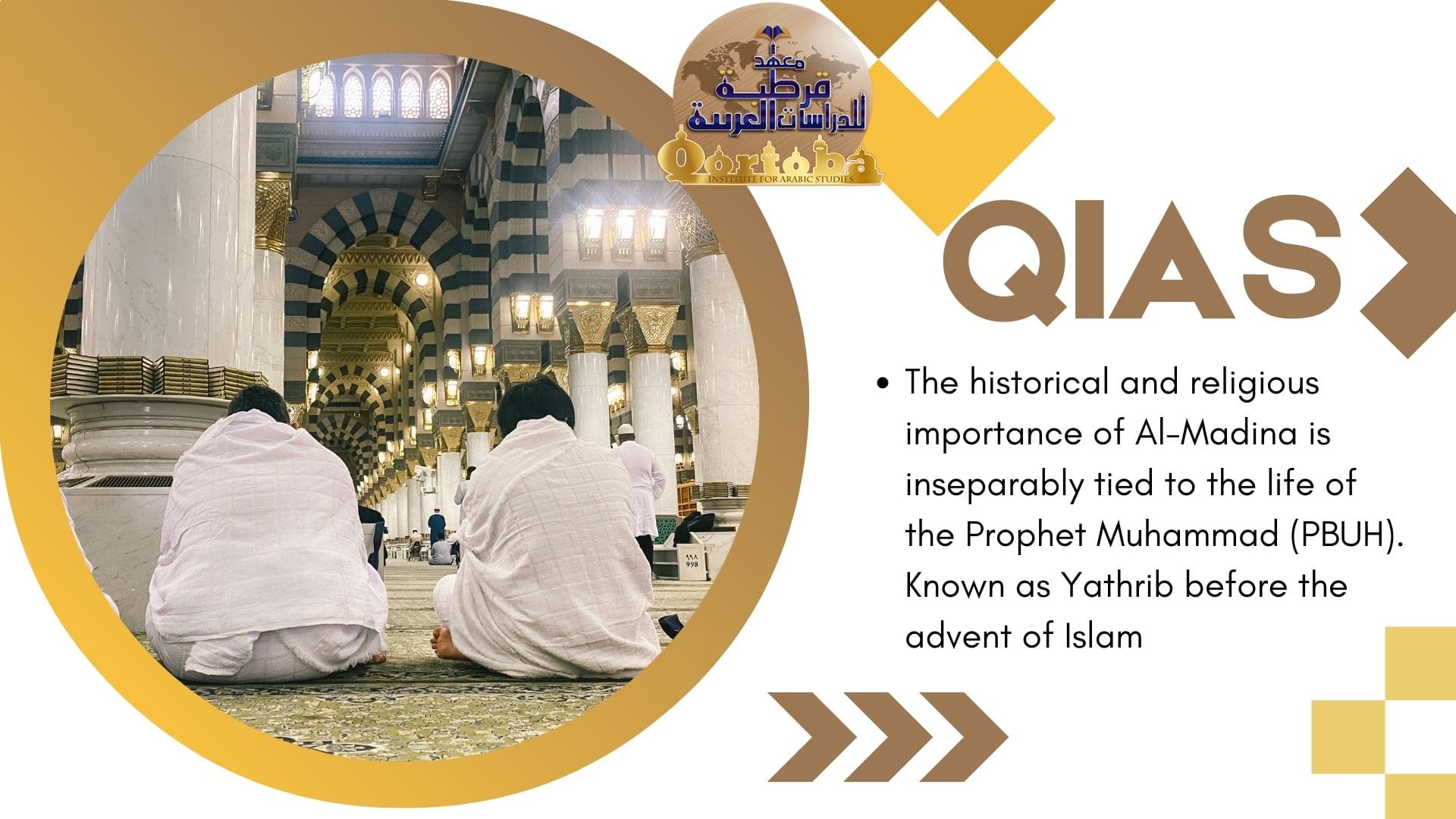
The historical and religious importance of Al-Madina is inseparably tied to the life of the Prophet Muhammad (PBUH). Known as Yathrib before the advent of Islam, the city was transformed into Al-Madina Al-Munawara. The transformation of Yathrib into Al-Madina Al-Munawara—literally, "The Radiant City"—commenced with the blessed migration (Hijra) of the Prophet Muhammad (PBUH) in the year 622 CE. This migration not only marked the establishment of the first Islamic State & Islamic Calendar but also ushered in an era of profound moral reform, community solidarity, and divine revelation.
- The Prophet’s Mosque (Masjid Al-Nabawi)
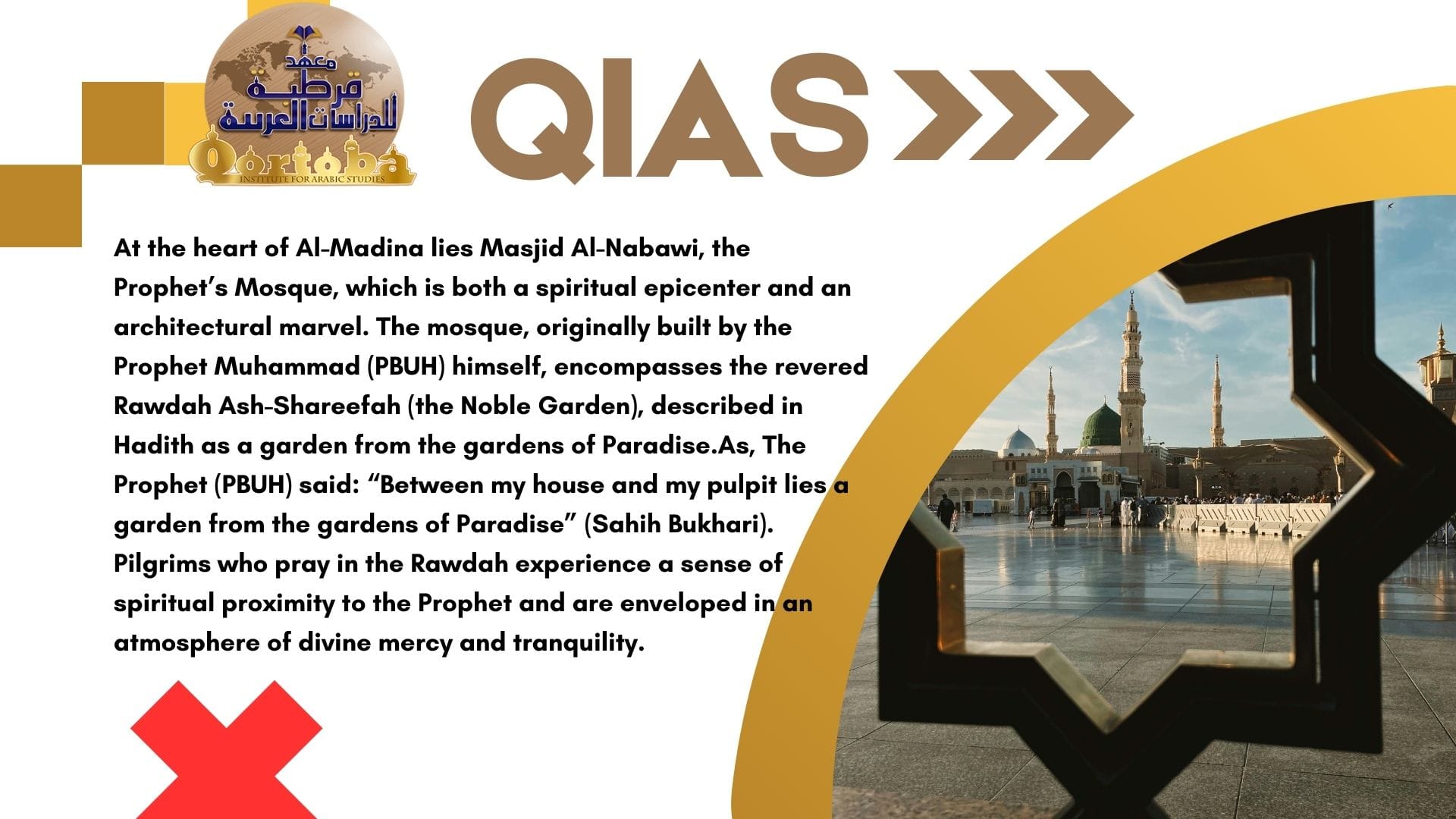
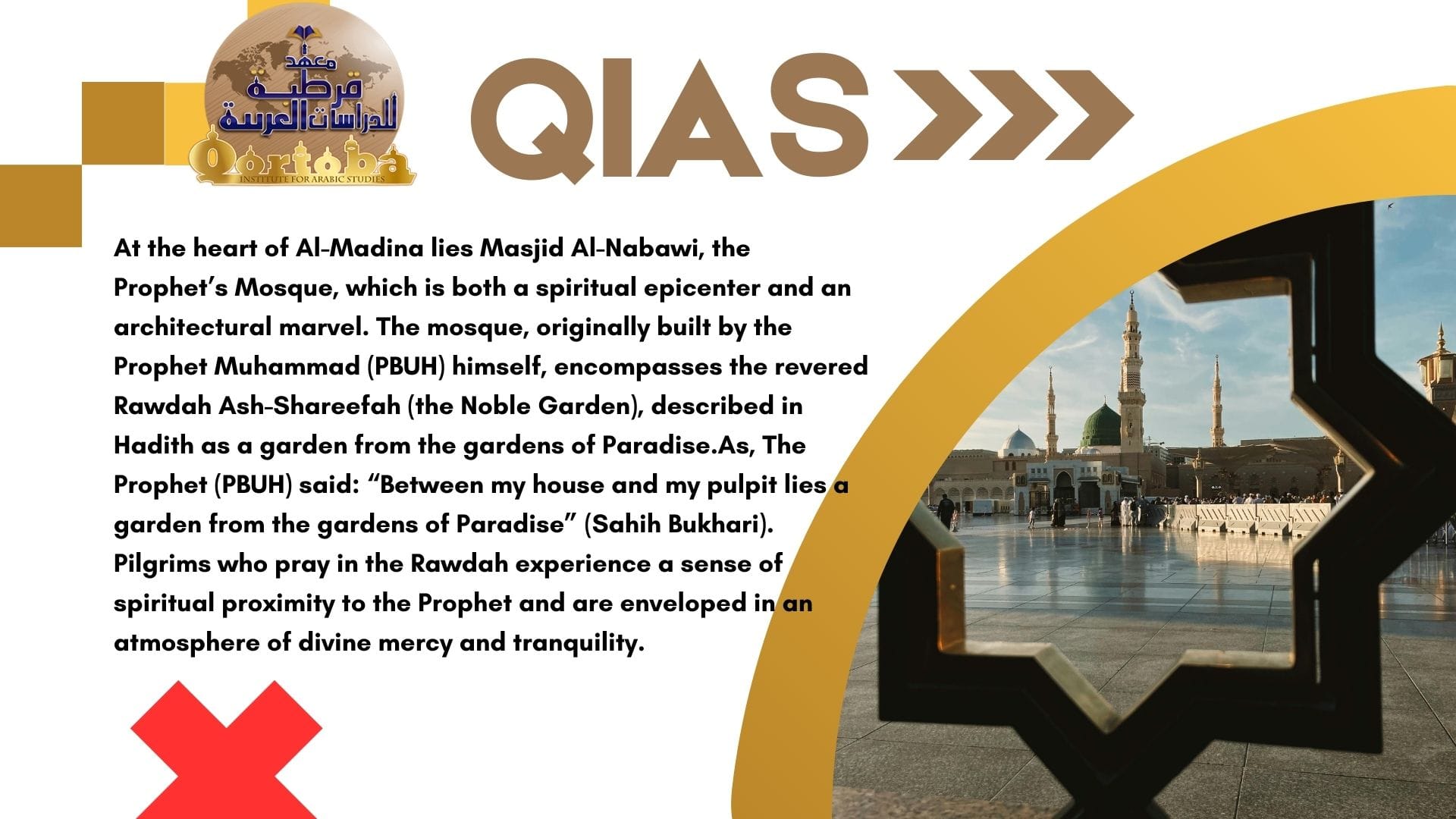
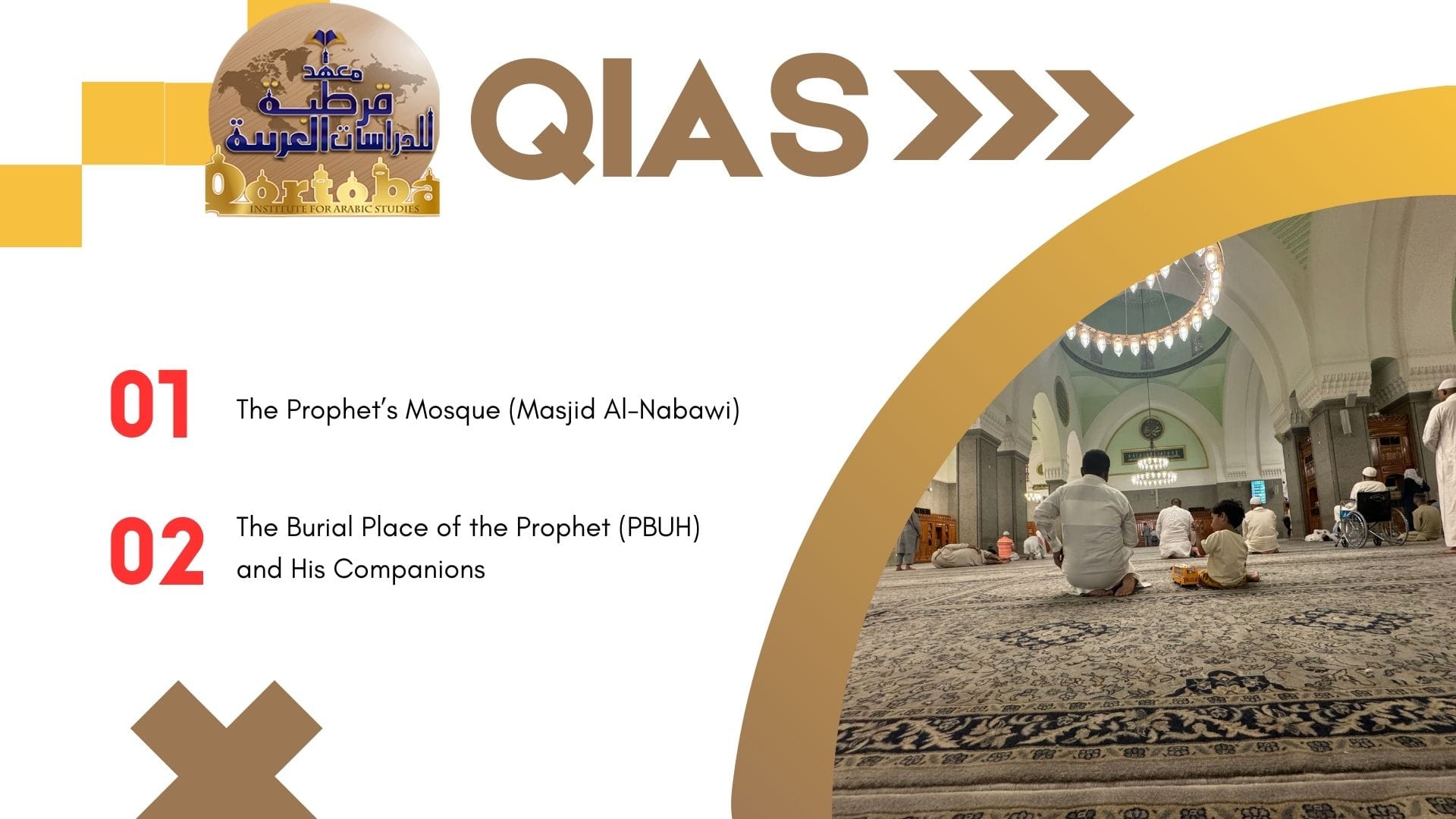
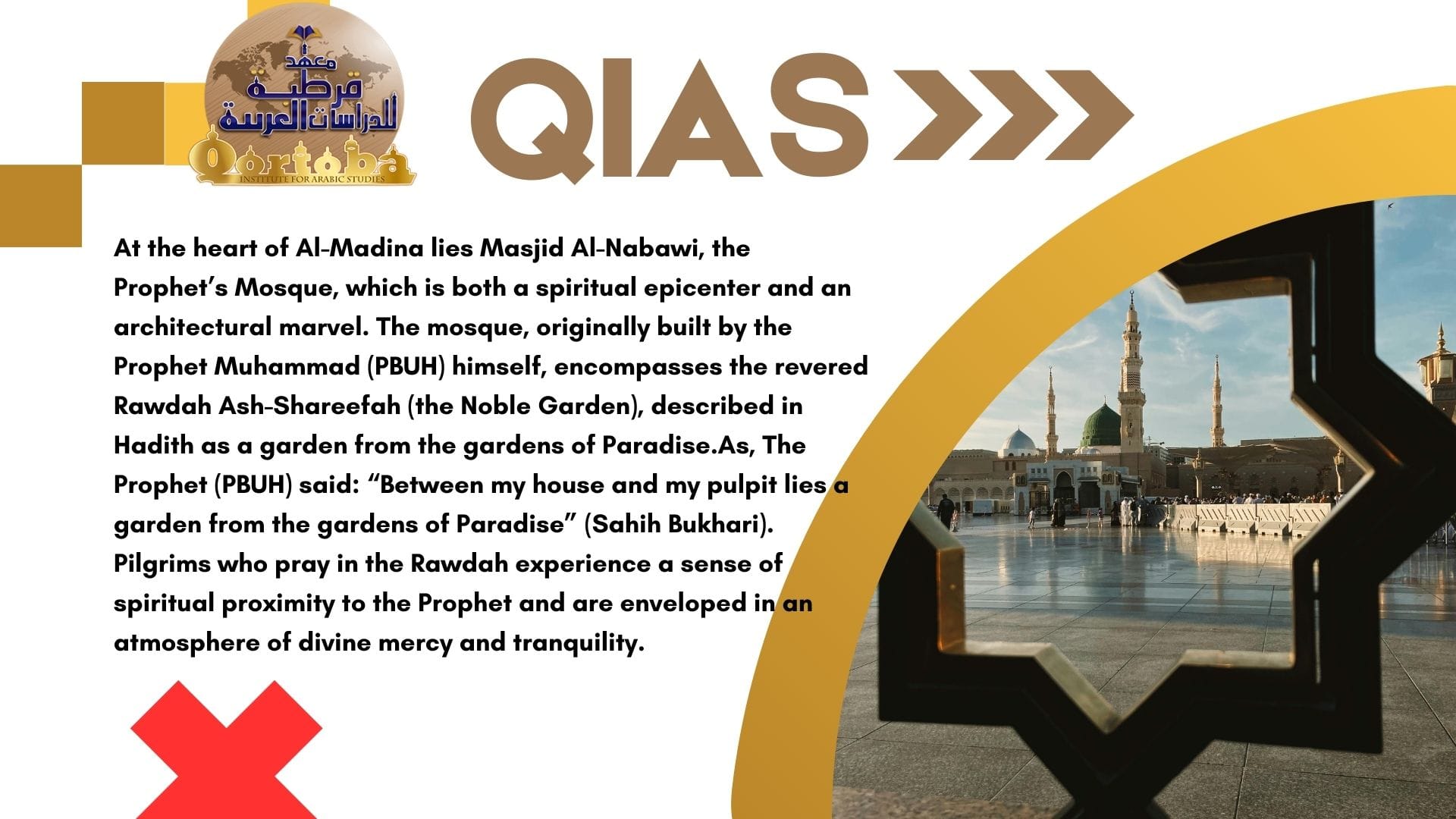
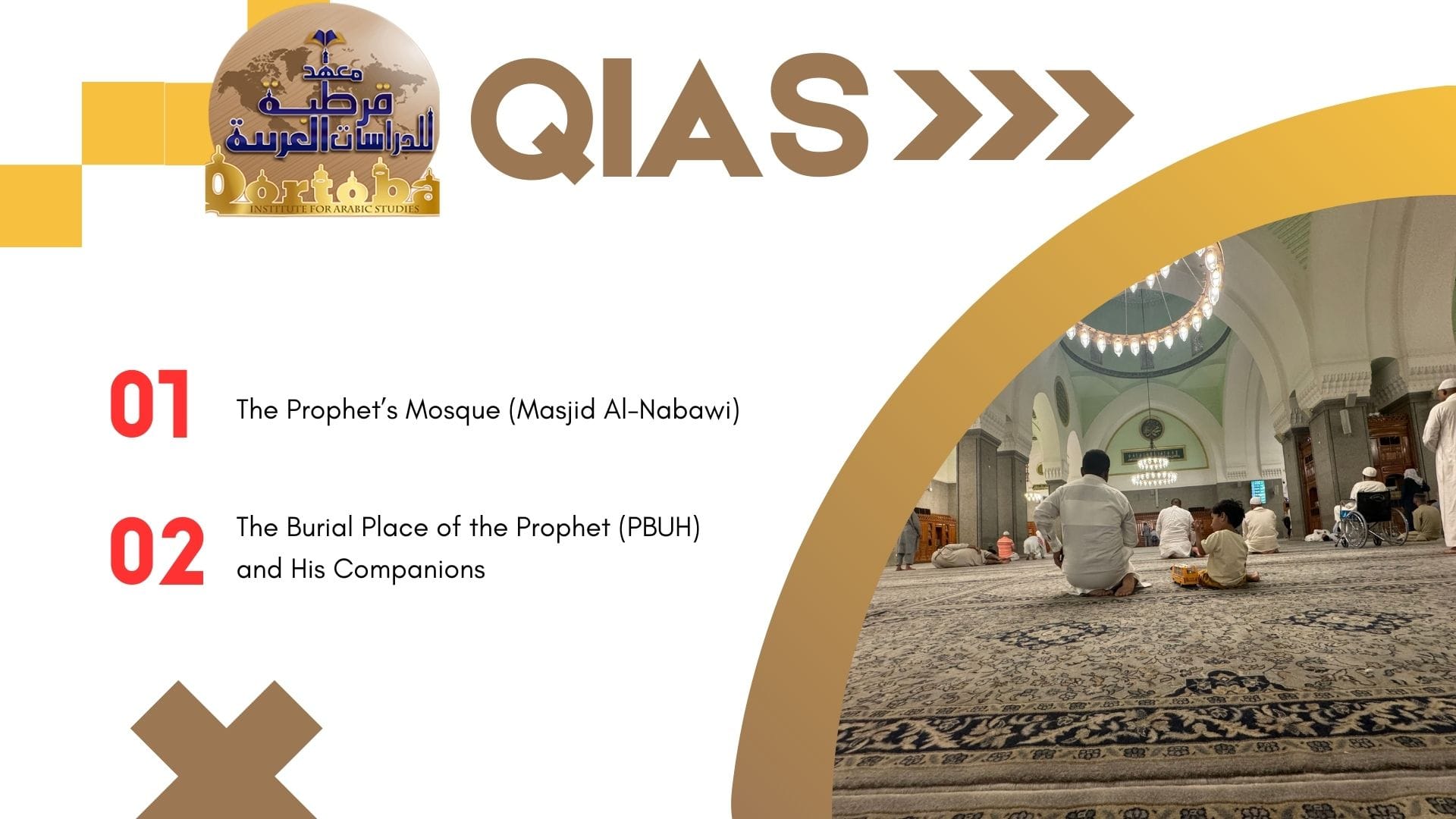
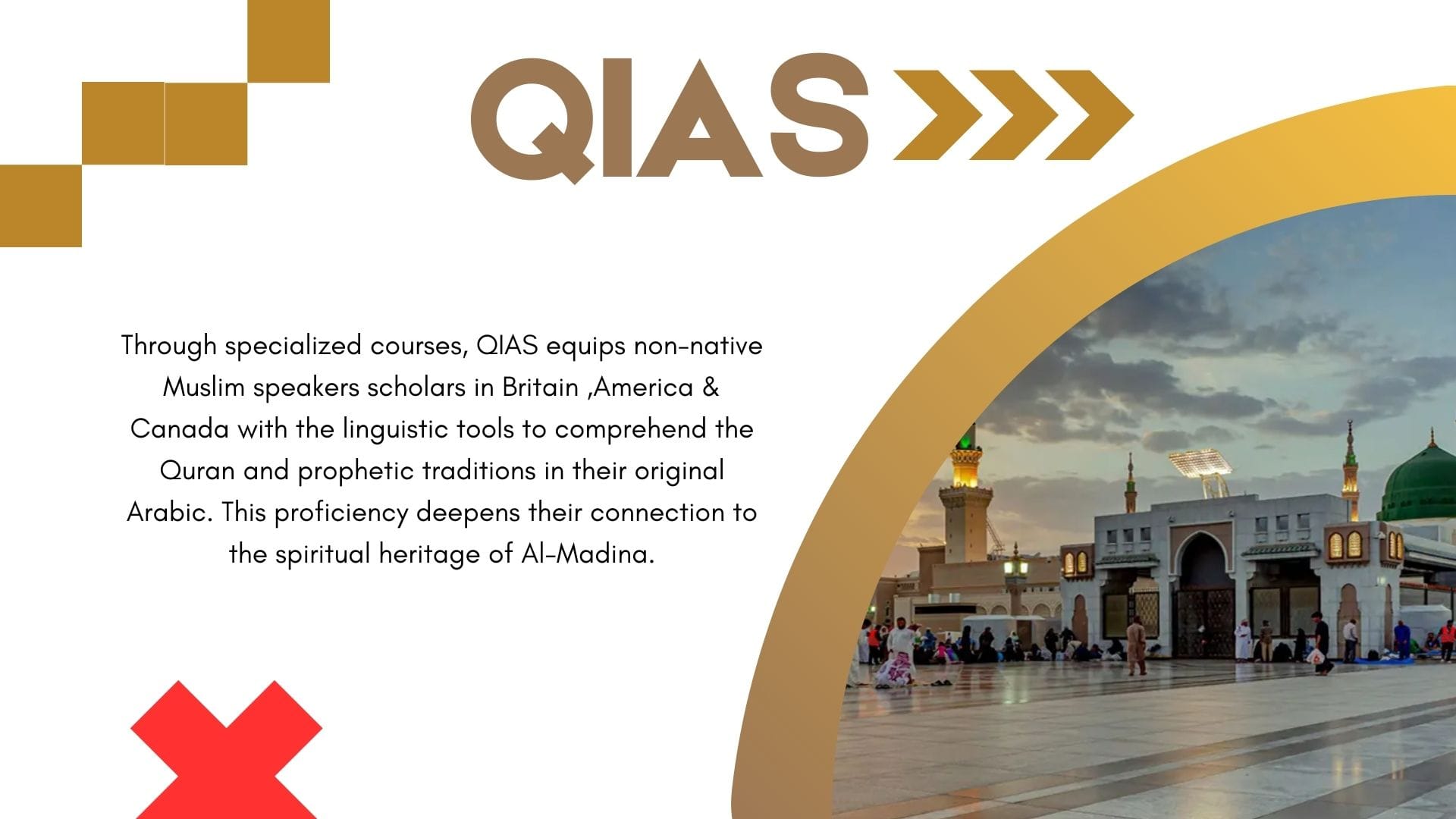
At the heart of Al-Madina lies Masjid Al-Nabawi, the Prophet’s Mosque, which is both a spiritual epicenter and an architectural marvel. The mosque, originally built by the Prophet Muhammad (PBUH) himself, encompasses the revered Rawdah Ash-Shareefah (the Noble Garden), described in Hadith as a garden from the gardens of Paradise. As the Prophet (PBUH) said: “Between my house and my pulpit lies a garden from the gardens of Paradise” (Sahih Bukhari). Pilgrims who pray in the Rawdah experience a sense of spiritual proximity to the Prophet and are enveloped in an atmosphere of divine mercy and tranquility.
- The Burial Place of the Prophet (PBUH) and His Companions
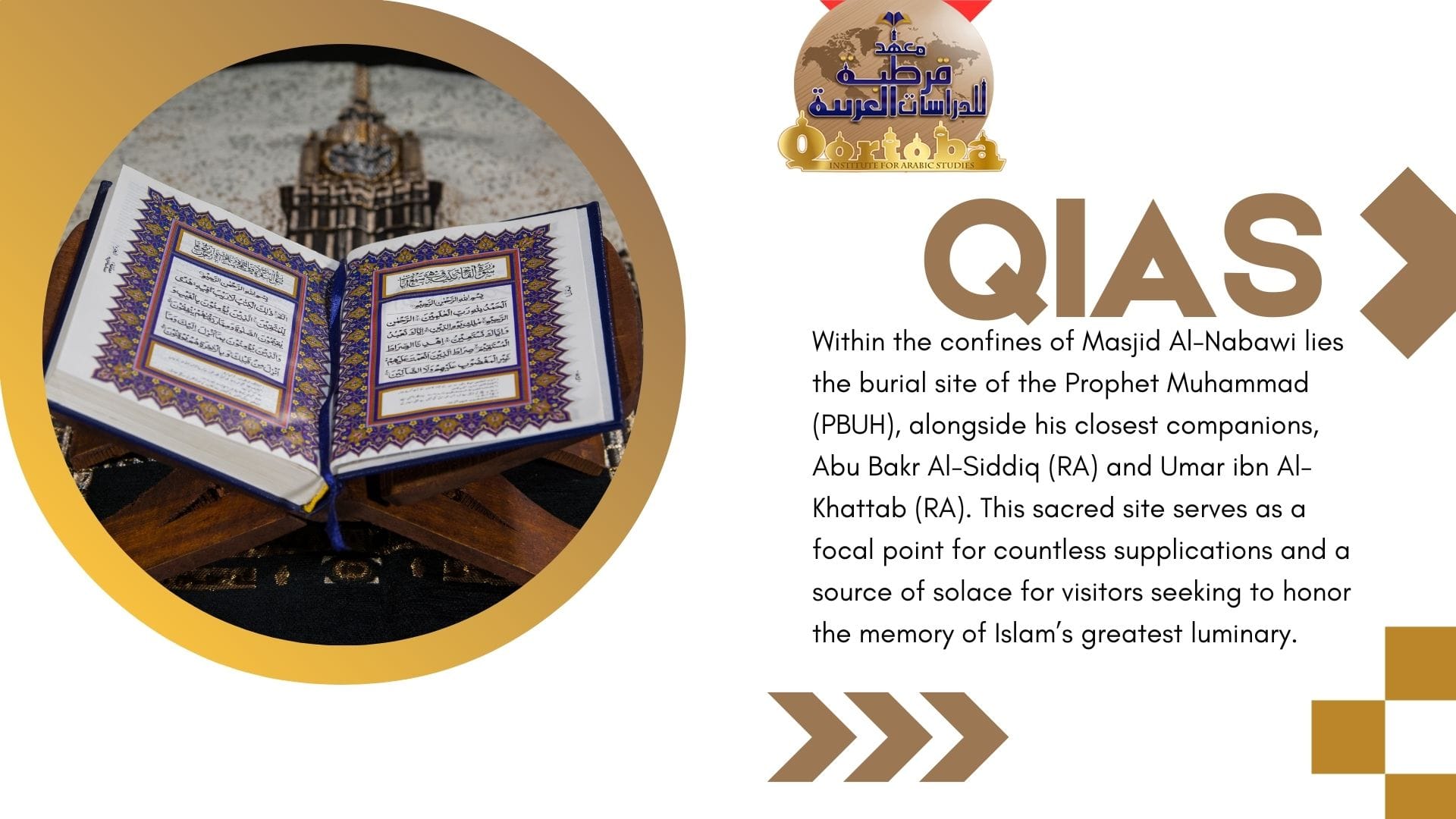
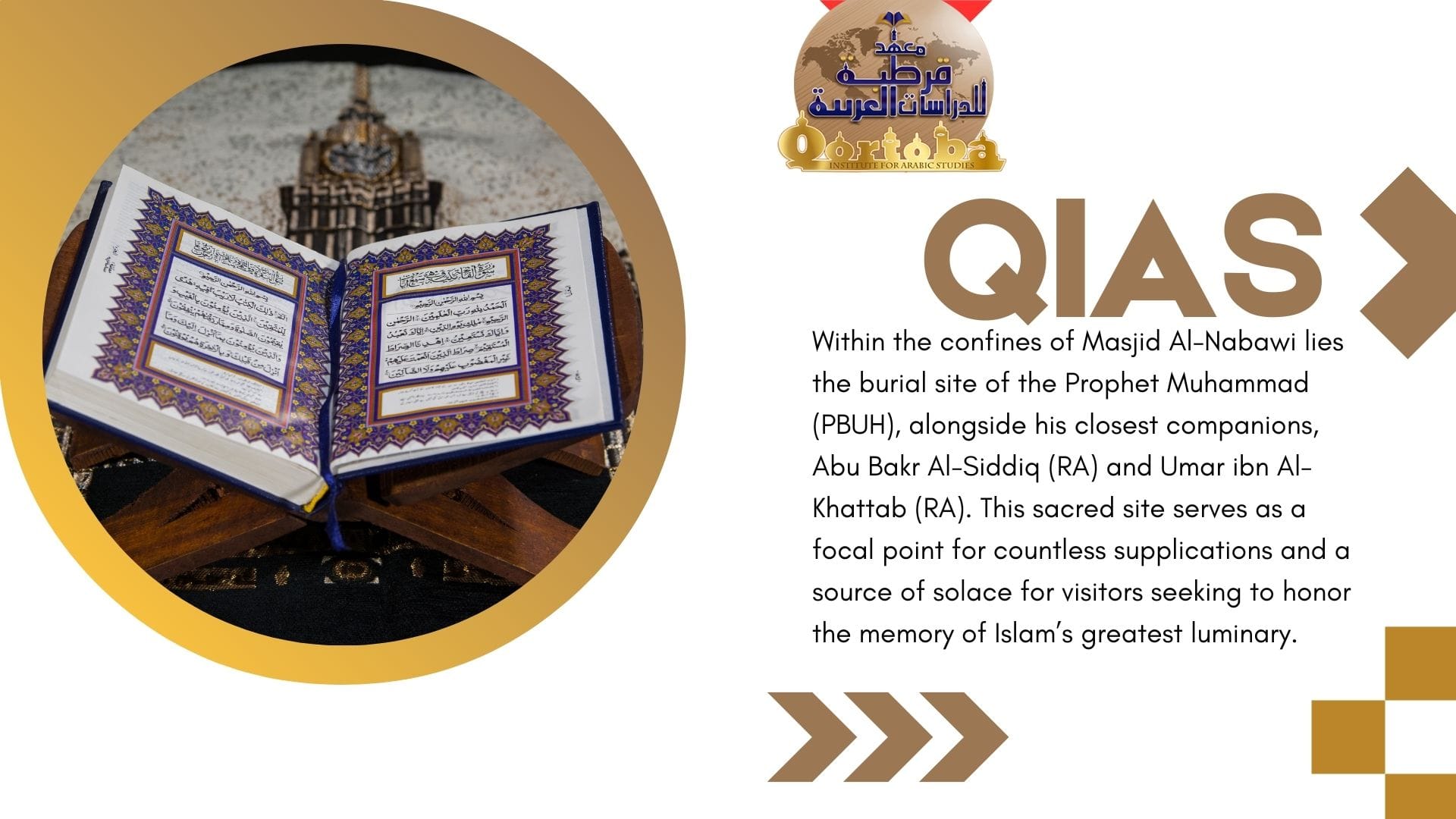
Within the confines of Masjid Al-Nabawi lies the burial site of the Prophet Muhammad (PBUH), alongside his closest companions, Abu Bakr Al-Siddiq (RA) and Umar ibn Al-Khattab (RA). This sacred site serves as a focal point for countless supplications and a source of solace for visitors seeking to honor the memory of Islam’s greatest luminary.
- Spiritual Merits of Al-Madina
The spiritual merits of visiting or residing in Al-Madina are profound and transformative. The city’s sanctified atmosphere, coupled with its association with the Prophet Muhammad (PBUH), instills a deep sense of reverence, peace, and self-reflection in all who enter its borders.
- The Blessings of Masjid Al-Nabawi
Praying in Masjid Al-Nabawi carries immense rewards, as described by the Prophet (PBUH): “One prayer in my mosque is better than a thousand prayers elsewhere, except for the Sacred Mosque (in Makkah)” (Sahih Bukhari). This exceptional reward underscores the unparalleled spiritual merit of worship within Al-Madina.
- A Sanctuary of Divine Protection
Al-Madina has been divinely protected from the forces of evil, as conveyed in the Hadith: “There will come no plague or Dajjal (Anti-Christ) in Madina” (Sahih Bukhari). This protection fosters a sense of security and divine guardianship, allowing residents and visitors to bask in the tranquility of a city preserved by Allah’s grace.
- Communal and Ethical Benefits
Beyond its spiritual dimensions, Al-Madina serves as a model for harmonious coexistence, ethical governance, and communal solidarity. The city’s historical role in the establishment of the first Islamic State underlines its enduring relevance as a beacon of moral and social reform.
- A Model of Brotherhood and Unity
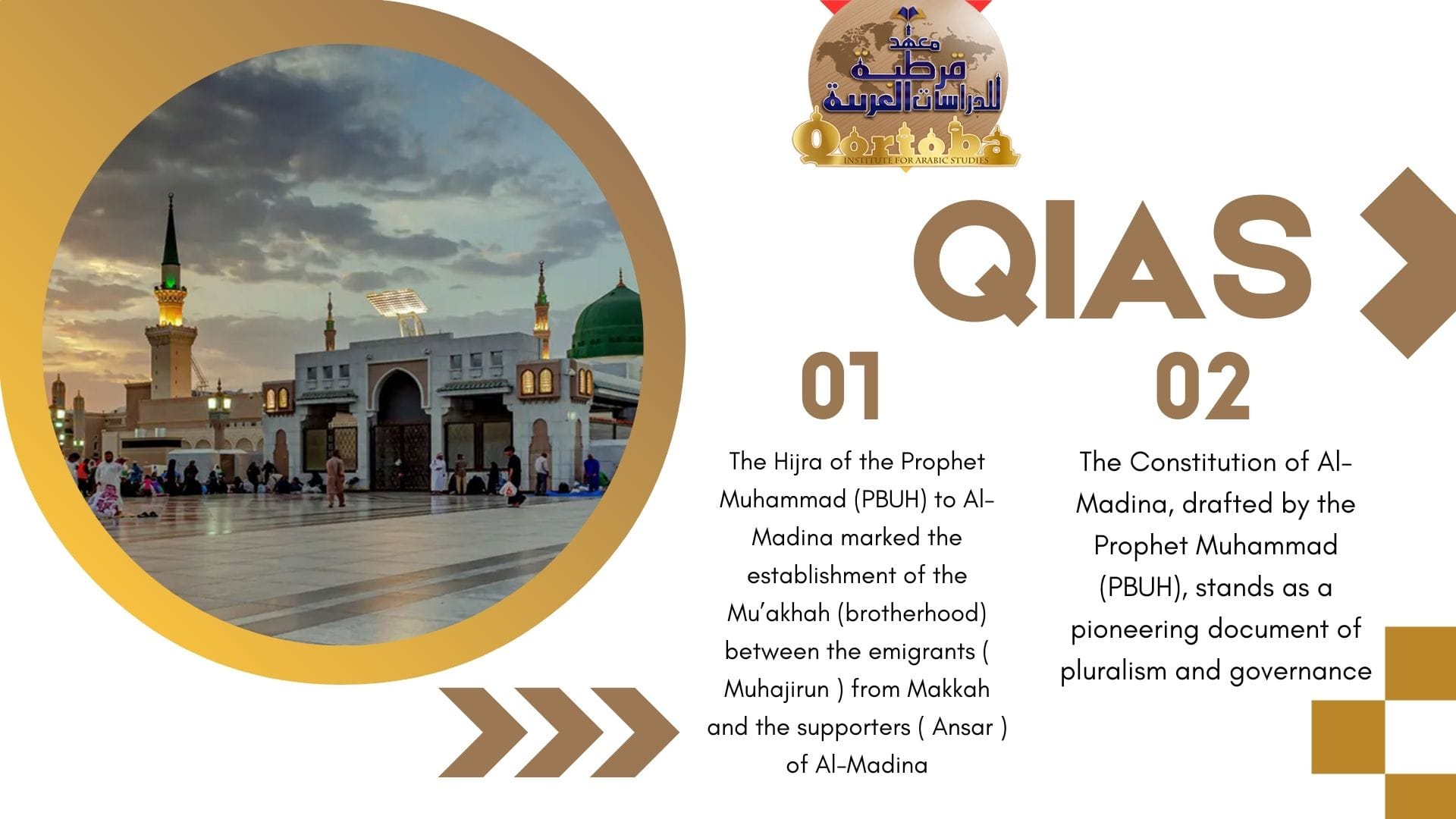
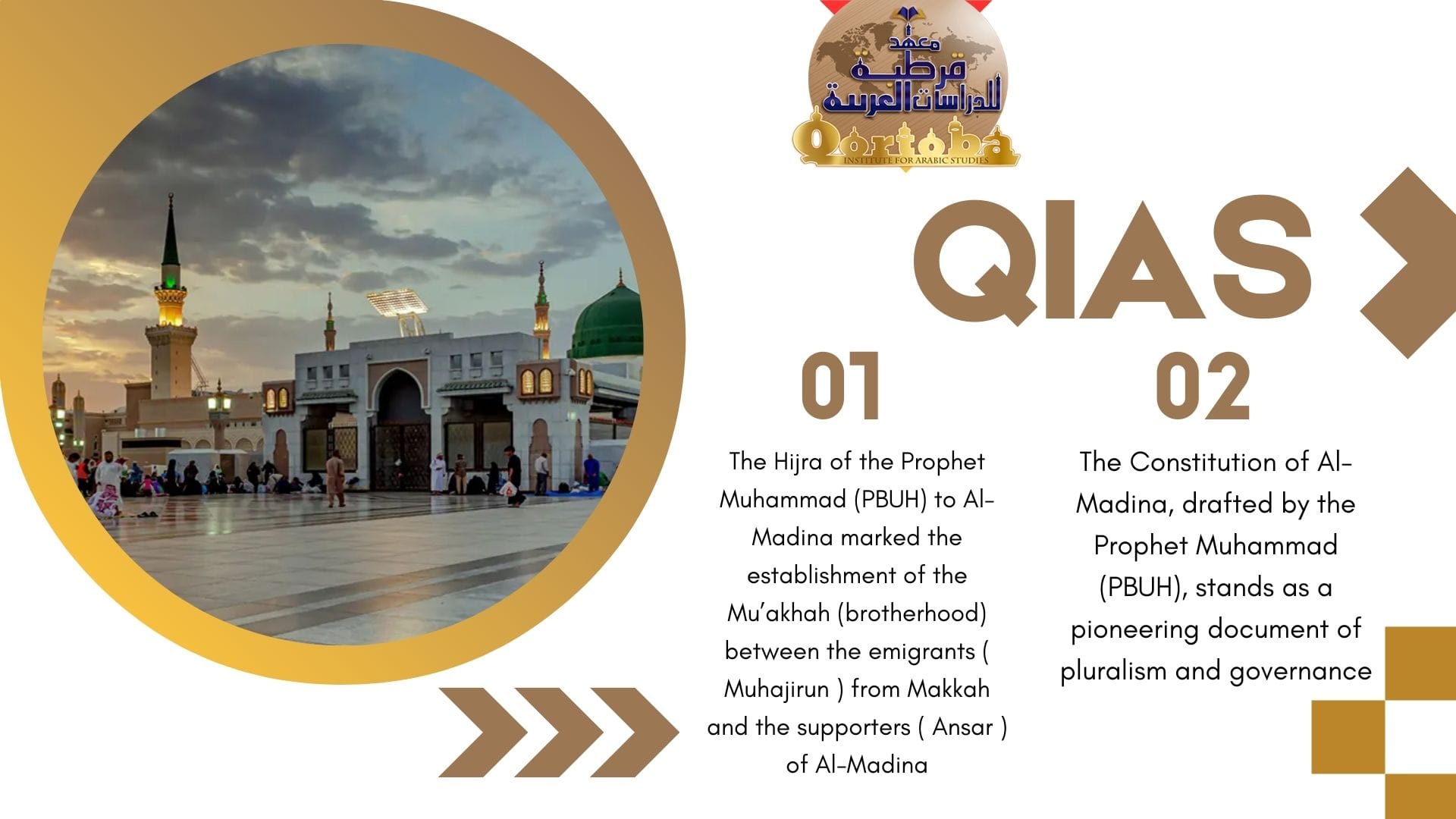
The Hijra of the Prophet Muhammad (PBUH) to Al-Madina marked the establishment of the Mu’akhah (brotherhood) between the emigrants (Muhajirun) from Makkah and the supporters (Ansar) of Al-Madina. This bond of brotherhood transcended tribal and socioeconomic divisions, laying the foundation for an inclusive and cohesive society. As an illustration, the Ansar shared their wealth, homes, and resources with the Muhajirun, embodying the Quranic injunction: “And they give [them] preference over themselves, even though they are in need” (Quran 59:9).
- The Constitution of Al-Madina
The Constitution of Al-Madina, drafted by the Prophet Muhammad (PBUH), stands as a pioneering document of pluralism and governance. It established the principles of justice, mutual rights, and coexistence among the diverse communities residing in the city.
- The Tranquility and Unique Milieu of Al-Madina
The serene atmosphere of Al-Madina, imbued with the echoes of prophetic teachings, is unmatched by any other city. Visitors often describe an intangible sense of peace that envelops them upon entering its sacred precincts.
- The Simplicity of Life
Al-Madina encourages simplicity and mindfulness, echoing the ethos of the Prophet Muhammad (PBUH). This simplicity inspires visitors to recalibrate their priorities and focus on spiritual and moral development.
- The Kindness of Its People
The residents of Al-Madina, following the example of the Ansar, are renowned for their hospitality, kindness, and devotion to serving pilgrims. Their warm and welcoming nature enhances the experience of every visitor, leaving an indelible mark on their hearts.
- Harness Al-Madina With QIAS
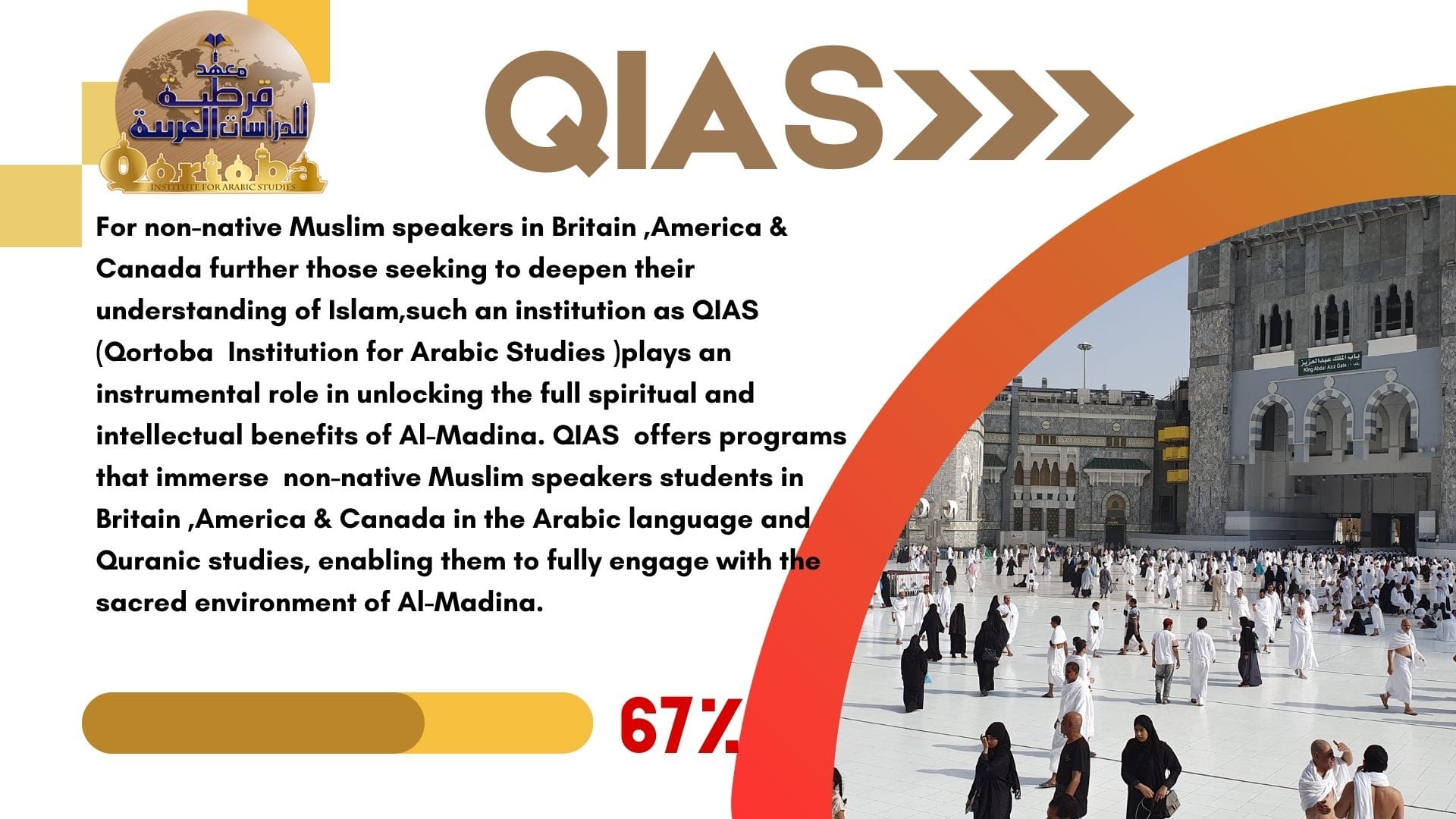
For non-native Muslim speakers in Britain, America & Canada further those seeking to deepen their understanding of Islam, such an institution as QIAS (Qortoba Institution for Arabic Studies) plays an instrumental role in unlocking the full spiritual and intellectual benefits of Al-Madina. QIAS offers programs that immerse non-native Muslim speakers students in Britain, America & Canada in the Arabic language and Quranic studies, enabling them to fully engage with the sacred environment of Al-Madina.
- Arabic Proficiency for Quranic Comprehension
Through specialized courses, QIAS equips non-native Muslim speakers scholars in Britain, America & Canada with the linguistic tools to comprehend the Quran and prophetic traditions in their original Arabic. This proficiency deepens their connection to the spiritual heritage of Al-Madina.
- Spiritual Enrichment
QIAS programs extend beyond linguistic training, incorporating elements of Islamic history, spirituality, and prophetic teachings. This holistic approach empowers non-native Muslim speakers learners in Britain, America & Canada to experience Al-Madina not merely as a physical space but as a living embodiment of prophetic wisdom.
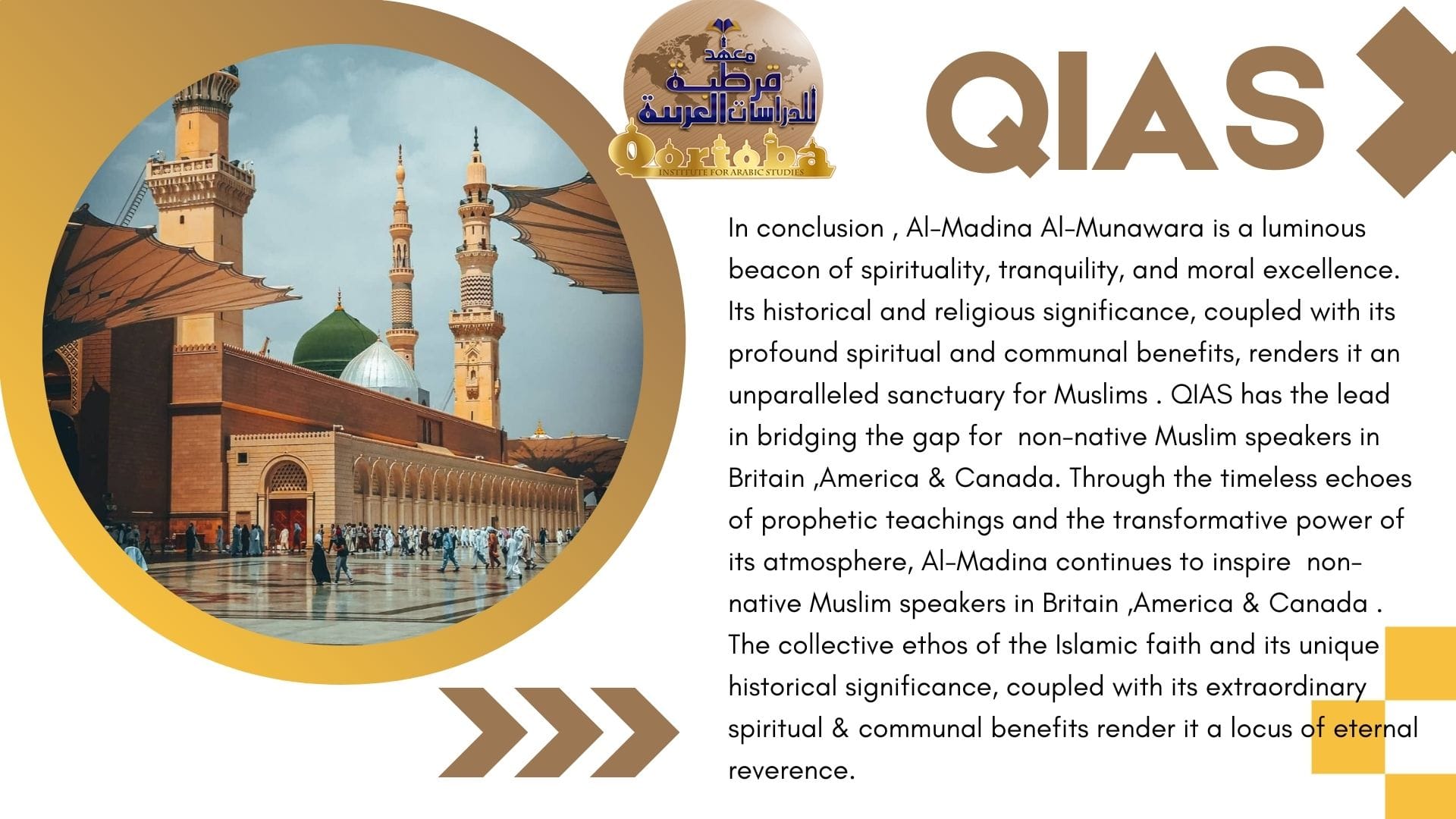
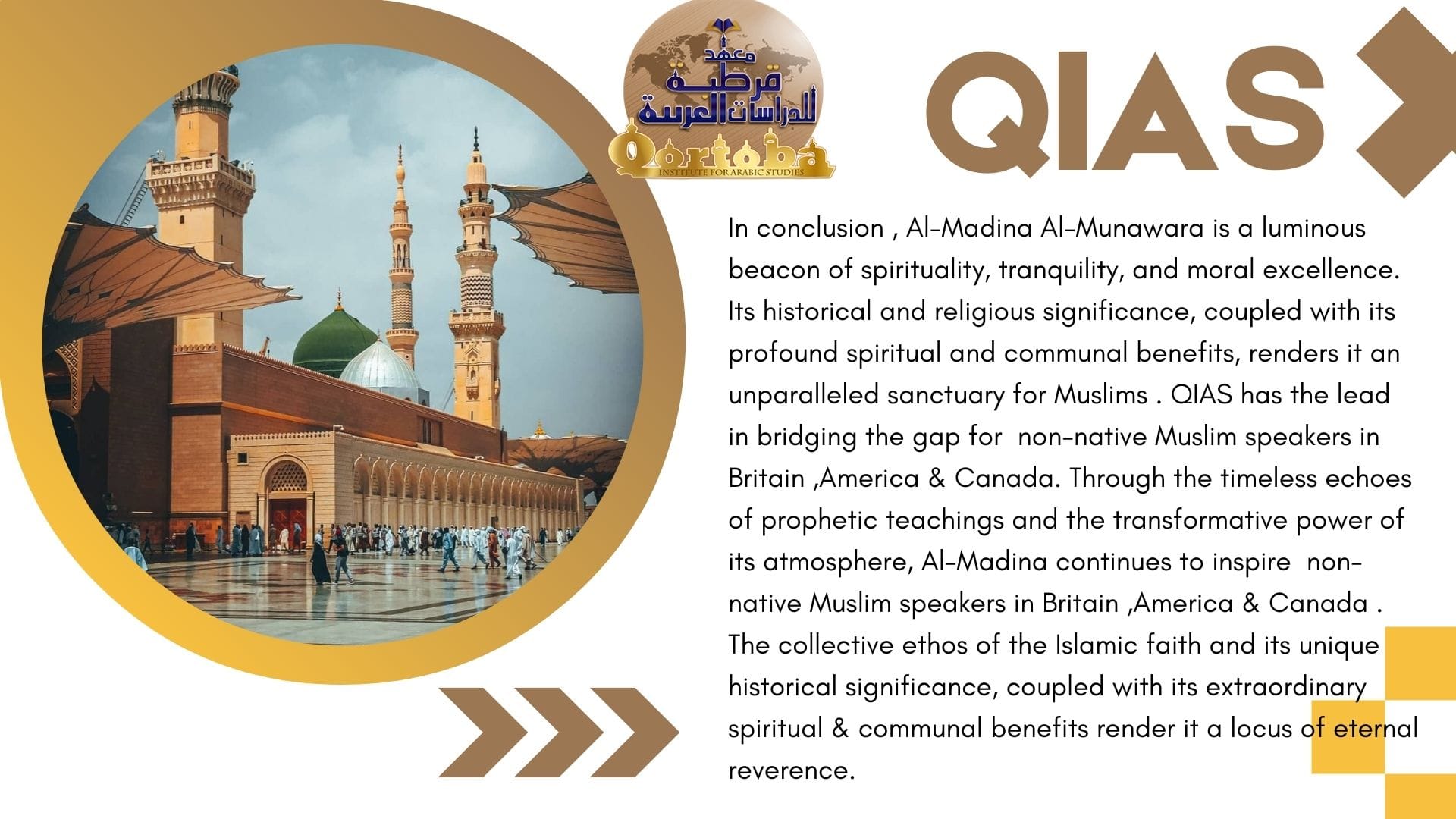
In conclusion, Al-Madina Al-Munawara is a luminous beacon of spirituality, tranquility, and moral excellence. Its historical and religious significance, coupled with its profound spiritual and communal benefits, renders it an unparalleled sanctuary for Muslims. QIAS has the lead in bridging the gap for non-native Muslim speakers in Britain, America & Canada. Through the timeless echoes of prophetic teachings and the transformative power of its atmosphere, Al-Madina continues to inspire non-native Muslim speakers in Britain, America & Canada. The collective ethos of the Islamic faith and its unique historical significance, coupled with its extraordinary spiritual & communal benefits render it a locus of eternal reverence.
An Egyptian house of Arabic learning — teaching Arabic and the Qur'an to non-native speakers online, in Cairo and in Al-Madinah.